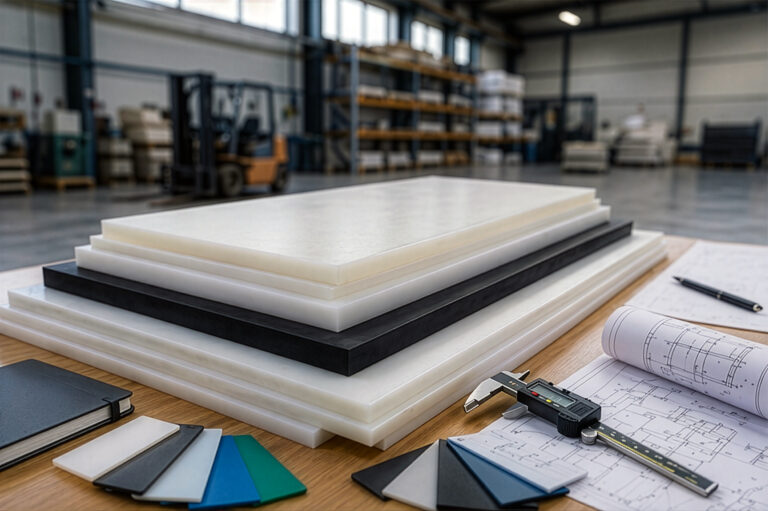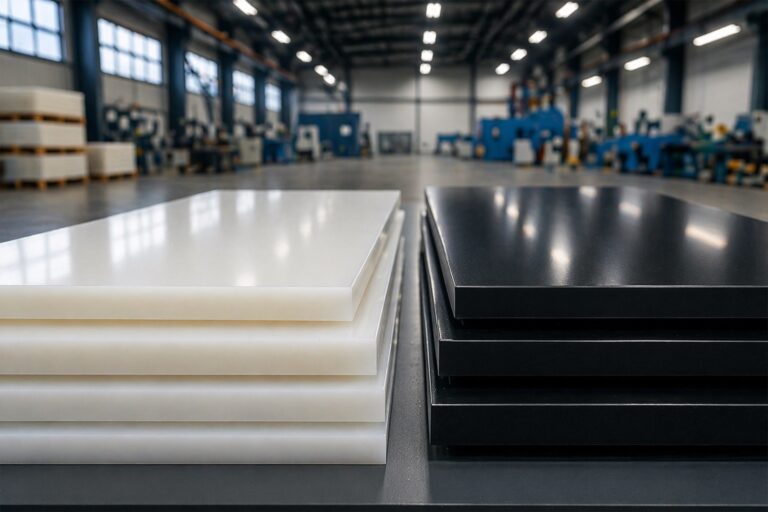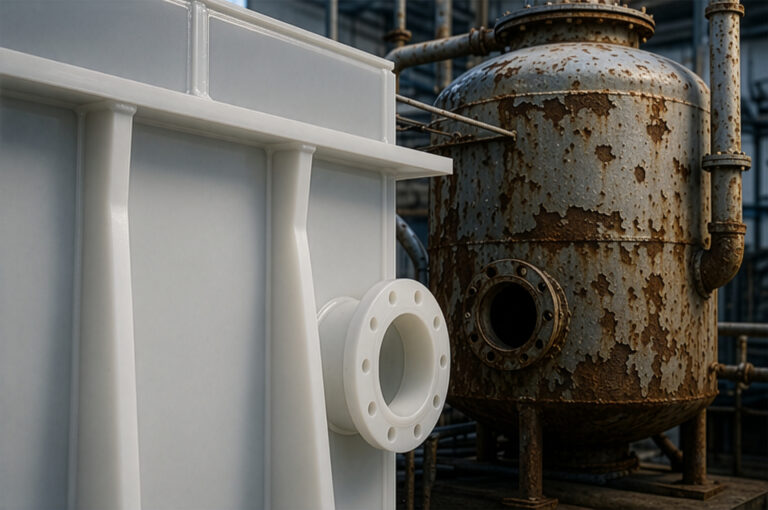
In industrial fabrication, material selection is never just a box-checking exercise. The material becomes part of the equipment’s long-term performance, the fabrication route, the maintenance profile, and the reliability of the system once it goes into operation. That is exactly why PP sheets are so often specified in chemical tanks, wastewater equipment, and process fabrication.
They fit the logic of these applications.
Across industrial sectors, polypropylene sheet is used in fabricated structures that need chemical resistance, dimensional stability, practical weldability, and dependable performance in humid or corrosive operating environments. That combination makes it especially relevant for process-related equipment where the material is not decorative or secondary. It is functional, exposed, and expected to perform continuously.
When engineers and buyers look for information about PP sheets for chemical tanks or wastewater equipment, they are usually trying to answer a practical question: why is PP so common in these systems, and where does it actually add value?
This article explains how PP sheets are used in industrial process fabrication, why they are frequently specified in chemical and wastewater-related applications, and what project teams should consider before requesting a quote.
PP sheets are widely used in process fabrication because they align well with the needs of industrial equipment that must resist chemical exposure while still being practical to manufacture.
That matters in applications such as:
In these projects, the sheet is often welded, cut, fabricated, and integrated into custom industrial assemblies. That means the material must do more than tolerate the operating environment. It must also support a reliable fabrication path.
This is one of the reasons PP sheet is so relevant in process-oriented sectors. The material supports custom manufacturing while also fitting environments where corrosion and chemical compatibility matter every day.
Chemical tanks are one of the clearest examples of where PP sheet proves its value. In these systems, the material is often used as the base for fabricated tank bodies, covers, partitions, internal elements, and auxiliary structures that need to withstand process exposure over time.
These tanks may be part of:
The main reason PP sheet appears so often in these applications is simple: chemical tanks demand a material that can support corrosive industrial duty while also being suitable for fabricated construction. A tank is not just a panel. It is a welded industrial system made from multiple parts that need to work together under operating conditions.
That combination of chemical resistance and fabrication suitability is exactly where PP becomes a natural candidate.
In practice, PP sheet may be used for:
Not every chemical service condition is the same, of course. That is why media exposure, operating temperature, and fabrication design still need to be reviewed case by case. But as a material family, PP is strongly associated with this type of industrial use for a reason.
Wastewater systems create a different but equally demanding environment. Moisture is constant. Chemical exposure may vary. Equipment can face aggressive media, process instability, and long operating cycles. In this context, the material selected for fabricated structures needs to support more than a short-term build. It needs to support ongoing industrial service.
PP sheets are frequently used in wastewater-related equipment such as:
What makes PP relevant here is that wastewater equipment often combines several challenges at once. It may involve humidity, corrosion risk, exposure to chemicals, the need for fabrication, and pressure for long-term maintenance control. Materials that struggle with any one of those areas can create recurring operational problems later.
PP sheet is often selected because it offers a more appropriate balance for this kind of system. It is not a generic answer. It is a material commonly used where process exposure and fabricated industrial construction meet.
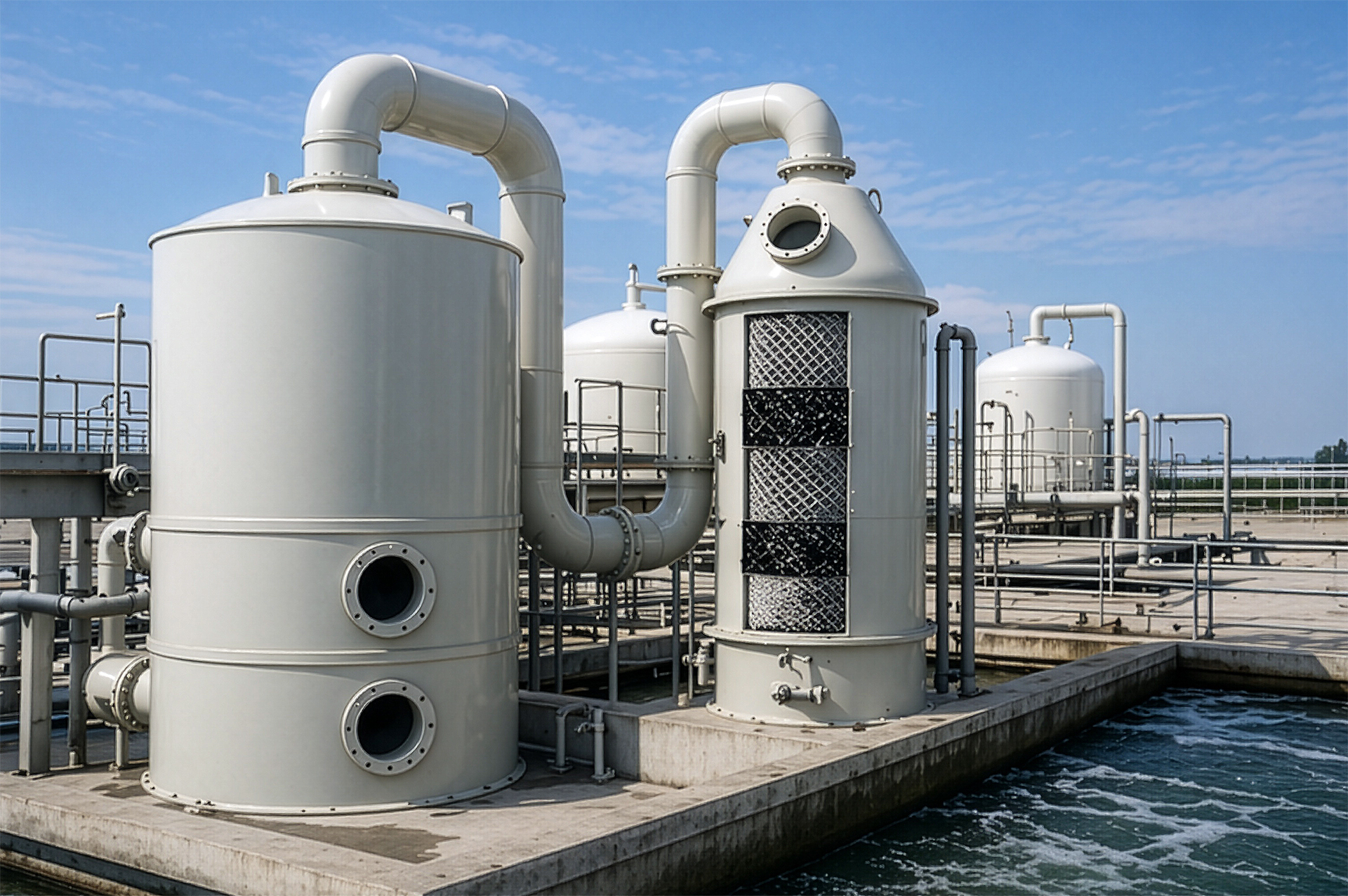
Another important area for PP sheet is gas treatment and process air handling systems, especially scrubbers and industrial ducting.
These systems often require fabricated components that can operate in chemically aggressive or moisture-heavy conditions while maintaining structural reliability and manufacturability. In these environments, corrosion concerns can quickly rule out less suitable materials or create a long-term maintenance burden.
PP sheets are commonly used for:
The reason is not only chemical resistance. It is also the fact that these systems are rarely standardized in a simple way. Many are built around plant-specific layouts, project dimensions, and operating requirements. That increases the importance of sheet fabrication and custom manufacturing logic.
In other words, the value of PP here comes from the combination of in-service suitability and fabrication practicality.
One of the biggest reasons PP sheet keeps showing up in these industrial systems is that the applications are fabrication-driven.
A chemical tank, a wastewater assembly, or a scrubber is not usually an off-the-shelf plastic object. It is a fabricated industrial system made to fit a specific plant, process, dimension set, and operating condition. That changes the material conversation completely.
When fabrication is central to the project, the team has to think about:
This is why material selection in process fabrication cannot be separated from manufacturing logic. A material may look attractive on paper, but if it does not support the fabrication route effectively, it becomes harder to turn the project into a dependable industrial asset.
PP sheet is relevant precisely because it supports both sides of the equation: industrial use and fabricated construction.
Even though PP is widely used in these applications, specifying it still requires technical review. The best projects do not rely on habit. They rely on a proper understanding of operating conditions and fabrication needs.
Before requesting a quote or locking in a specification, teams should review:
Chemical compatibility is central in tanks, wastewater systems, and scrubbers. The actual media and process conditions matter.
Temperature affects material suitability and should be part of the review from the beginning.
If the equipment will be exposed to outdoor conditions, UV-related requirements may need to be considered in material selection.
Simple cut panels, fully fabricated tanks, custom ducts, and integrated process assemblies all involve different levels of conversion and design complexity.
Material planning becomes much easier when the project defines geometry, wall thickness expectations, and fabrication scope early.
Clarifying the decision criteria helps align the material discussion with the real project objective.
These questions are not just useful for engineering. They are useful for purchasing too, because they improve quotation quality and reduce ambiguity.
In many process-related environments, PP sheet is chosen because it offers a more appropriate material logic than some traditional options.
That replacement usually happens when the existing or legacy material creates recurring issues such as:
What teams often want is not simply “a plastic alternative.” They want a material that better supports the industrial reality of the system they are building. In tanks, wastewater equipment, and process fabrication, PP frequently becomes that answer because it is already well established in this technical space.
For customers working on tanks, wastewater systems, and process-fabricated equipment, the supplier matters almost as much as the material itself. A strong project depends on more than access to sheet stock. It depends on technical understanding of the application, the fabrication route, and the industrial expectations around the finished system.
Lamiex operates as a Brazilian B2B manufacturer focused on PP and HDPE sheet solutions for industrial applications. In the case of PP-based process fabrication, that means supporting sectors and projects where technical material fit, customization, and industrial consistency matter.
This includes discussions around:
That kind of support is especially useful in projects where the equipment is custom, the exposure is demanding, and the material has a direct effect on long-term reliability.
PP sheets are widely used in chemical tanks, wastewater equipment, and process fabrication because they match the technical logic of these applications.
They support fabricated industrial construction. They are strongly associated with chemical-duty environments. And they help project teams build systems that are better aligned with corrosive, humid, and process-intensive operating conditions.
The key is not to treat PP as a generic industrial plastic. Its real value appears when the application is reviewed properly: the environment, the fabrication method, the operating conditions, and the function of the finished equipment all need to be considered together.
Once that happens, the reason PP sheet is so common in tanks, wastewater systems, and process fabrication becomes much clearer.
If your team is evaluating a fabricated industrial project in one of these areas, the best next step is to define the operating conditions and fabrication scope clearly before quotation. That creates a more accurate discussion around material, design, and long-term performance.
Lorem ipsum dolor sit amet, consectetur adipiscing elit. Sed posuere consectetur est at lobortis. Aenean lacinia bibendum nulla sed consectetur. Sed posuere consectetur est at lobortis. Cras mattis consectetur purus sit amet fermentum. Nullam quis risus eget urna mollis ornare vel eu leo.