Material replacement is no longer a side conversation in industrial projects. In many sectors, it has become part of the core engineering and procurement decision. Teams are under pressure to reduce maintenance, extend service life, simplify fabrication, and improve operational reliability. When traditional materials keep creating the same problems, replacement stops being optional and starts becoming necessary.
That is where PP and HDPE sheets enter the picture.
Across industrial environments, these materials are increasingly specified as alternatives to more traditional options in applications where corrosion, moisture, impact, weight, and maintenance all play a role. The change is not driven by trend alone. It is driven by practical performance in real operating conditions.
When people ask why industrial projects replace traditional materials with PP and HDPE sheets, they are usually trying to solve a recurring operational problem. Metal may corrode. Wood may absorb moisture and lose stability. Fiberglass may bring its own fabrication and maintenance limitations. In the wrong environment, the “standard” material becomes the reason the project underperforms.
This article explains why that replacement happens, where it makes the most sense, and what engineers and buyers should evaluate before moving from a traditional material to a thermoplastic sheet solution.
Traditional materials stay in industrial use for good reasons. They are familiar, widely available, and often deeply embedded in legacy project standards. But familiar does not always mean ideal.
In aggressive industrial environments, some of the most common problems tied to traditional materials include:
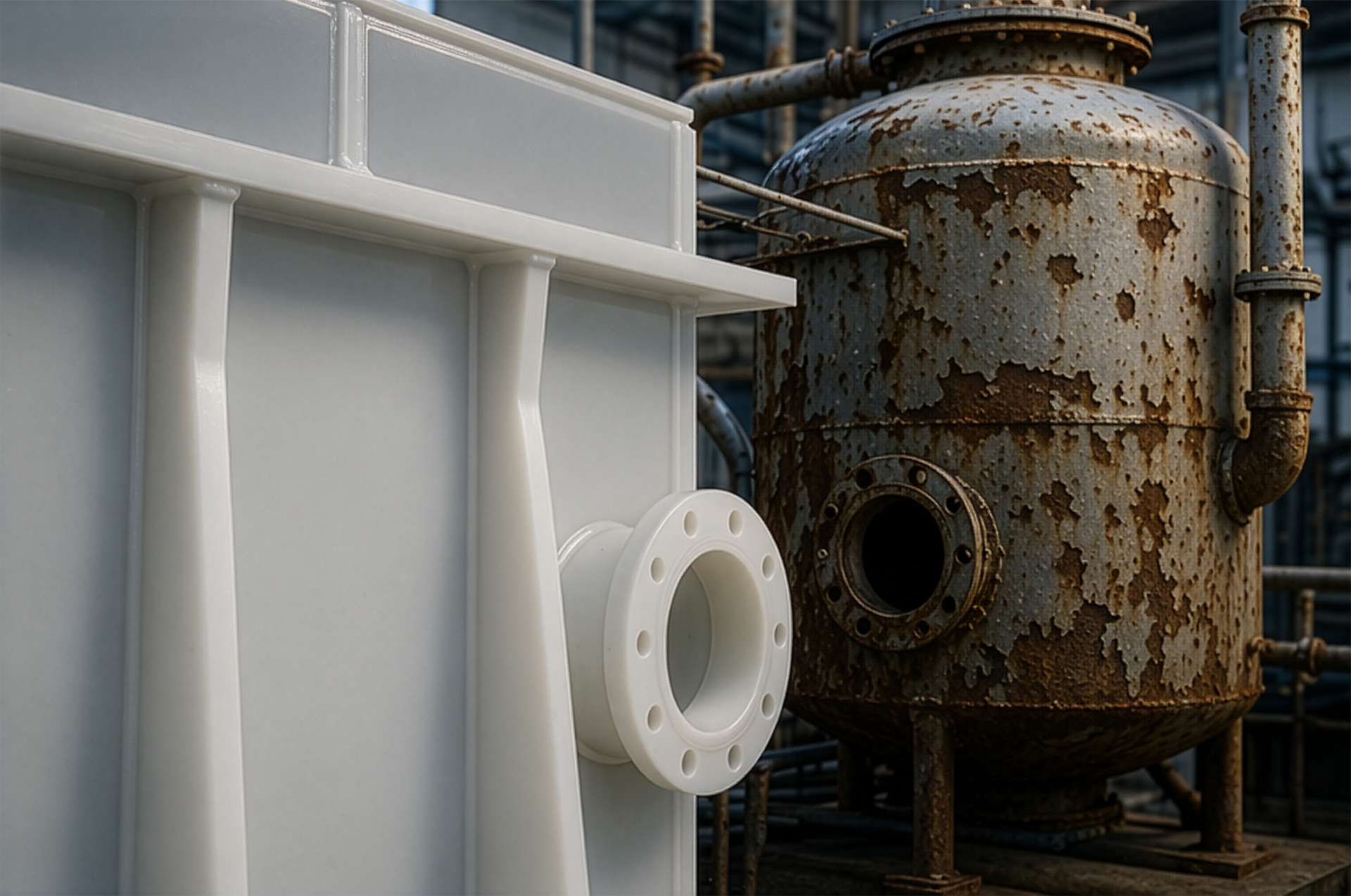
Metal is a good example. In many industrial settings it delivers structural familiarity, but once chemicals, humidity, or wastewater exposure become part of the operating routine, corrosion can quickly change the maintenance profile of the asset. Protective coatings help, but they do not eliminate the need for monitoring, repair, and downtime over time.
Wood creates a different set of issues. In environments with moisture, cleaning routines, or repeated industrial use, dimensional stability and long-term durability can become concerns. Fiberglass can work well in certain contexts too, but it is not automatically the easiest answer when the project depends on fabrication practicality, maintenance simplicity, or repeatability of industrial parts.
That is usually the point where teams start looking for a material that better matches the actual operating environment instead of simply repeating the legacy choice.
PP and HDPE sheets are not universal replacements. They are application-specific industrial materials. But in the right project, they change the decision in a very practical way.
The main reason is that they bring a different performance profile to the job. Instead of forcing the project team to fight corrosion, excess weight, or unnecessary maintenance, these materials often help reduce those issues at the source.
Depending on the application, PP and HDPE sheets can improve:
That does not mean both materials solve the same problem in the same way. PP and HDPE each support replacement decisions differently, depending on the application.
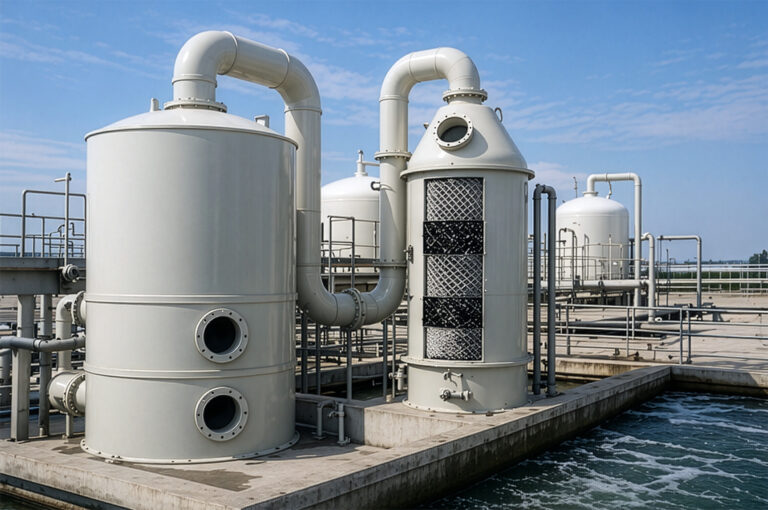
PP is often selected when the replacement project involves fabricated industrial equipment, process-related assemblies, chemical tanks, ducts, scrubbers, or structures where chemical resistance and weldable fabrication are central.
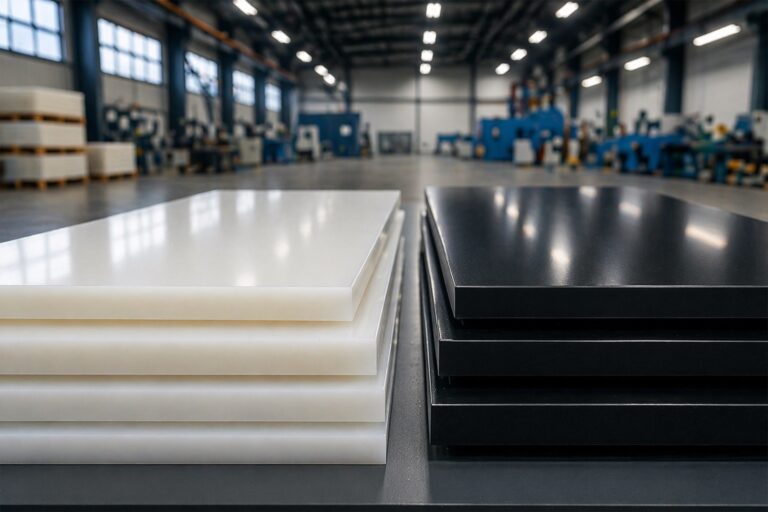
HDPE often gains space in applications where toughness, impact resistance, abrasion, moisture, and practical durability matter most. It becomes very relevant in liners, guides, wear components, machined parts, and industrial elements exposed to repeated mechanical use.
In both cases, the value of replacement comes from a better match between the material and the operating condition.
One of the strongest drivers behind the use of PP and HDPE sheets is the desire to reduce corrosion-related problems and the maintenance burden that comes with them.
In chemical processing, wastewater, utilities, and other industrial settings, exposure to corrosive media can turn conventional material choices into long-term maintenance liabilities. Teams do not just spend money on the initial build. They also pay for inspections, shutdowns, repairs, recoating, and premature replacement.
When PP sheet is used in fabricated tanks, ducts, and process equipment, the material is often chosen precisely because it supports chemical-duty applications more naturally. The same logic applies in wastewater and containment-related uses, where material compatibility with the environment affects service life and reliability.
HDPE may enter the equation differently, but it can also support lower-maintenance operation in wet and demanding environments, especially where the application is more mechanical than process-fabricated.
This is why replacement decisions are rarely only about material price. They are often about what the material will cost the operation after installation.
Weight reduction is sometimes treated like a secondary benefit, but in real industrial projects it can have a wide operational effect.
Lighter materials can influence:
This matters especially in custom-fabricated structures, large sheet-based assemblies, industrial covers, panels, and equipment components that need to be moved, cut, welded, machined, or installed in constrained areas.
Material replacement often gains internal support once engineering and operations realize that the project can become easier to build and easier to handle without sacrificing industrial suitability.
Not every replacement project is about environment alone. Many are also about what the material allows the manufacturer or fabricator to build.
That is where thermoplastic sheets become strategically useful.
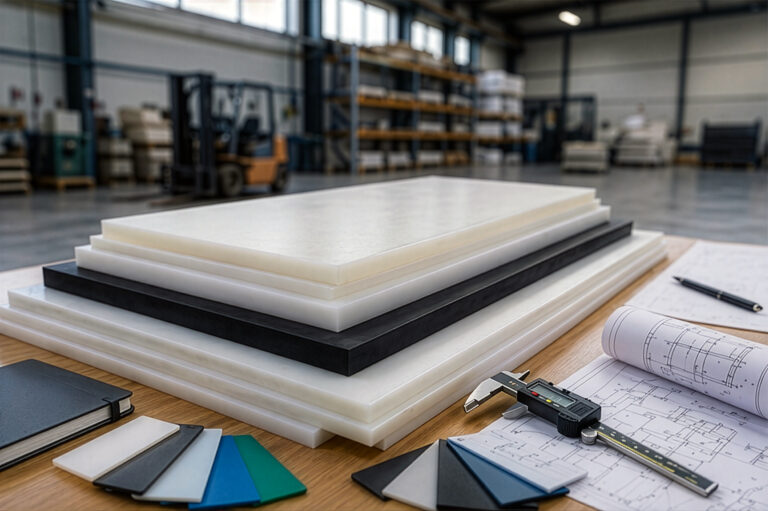
In fabricated industrial projects, material choice affects whether the team can produce custom structures efficiently and consistently. If the project depends on sheet conversion, welding, machining, or adaptation to specific dimensions and geometries, the material is not just part of the design. It is part of the manufacturing strategy.
PP sheet is especially relevant when the replacement project includes:
HDPE can support a different fabrication logic, often more centered on machined parts, wear-focused components, impact-related uses, and practical industrial utility parts.
That means replacement is not only about switching one material for another. It is about switching to a material that may support a more suitable fabrication route for the application.
There is no single replacement scenario. The logic changes by industry and application. Still, some environments repeatedly push teams toward PP and HDPE sheet solutions.
Replacement often makes sense in applications such as:
In these situations, the team is usually not replacing a material because it failed once. They are replacing it because the operating environment repeatedly exposes its limits.
That distinction is important. A single failure can be a one-off issue. A recurring failure pattern is usually a sign that the material strategy needs to change.
One of the most common mistakes in material replacement decisions is reducing the conversation to initial purchase cost alone.
That rarely tells the full story.
Industrial teams know that the cheapest-looking material on day one can become the most expensive one after exposure, maintenance, downtime, replacement labor, and operational disruption are considered. In many projects, the stronger business case for PP and HDPE sheets comes from lifecycle logic rather than purely from immediate cost comparison.
Replacement may create value through:
That is why a smart evaluation looks beyond “How much does the sheet cost?” and asks “What does the wrong material cost us over time?”
Not every traditional material should be replaced. And not every use of PP or HDPE is automatically correct. The best outcomes come from evaluating the application carefully.
Before moving forward with replacement, a project team should review at least these points:
Is the issue corrosion, weight, repeated maintenance, hygiene, wear, impact, fabrication difficulty, or all of the above?
Chemical exposure, humidity, UV, temperature, abrasion, and cleaning conditions all affect the answer.
A fabricated chemical tank and a wear liner may both use plastic sheets, but they do not ask for the same material logic.
Long-term durability, reduced maintenance, easier handling, better process fit, and lower operational risk may all have different weight depending on the project.
Some projects are straightforward. Others depend on custom dimensions, converted parts, or application-oriented technical support.
Those questions do more than improve the technical decision. They improve the purchasing decision too.
Replacement projects work better when the supplier understands why the change is being considered in the first place.
Lamiex is a Brazilian B2B manufacturer focused on industrial PP and HDPE sheet solutions for technical applications. That matters because the company is not positioned around small-volume consumer demand or generic plastic retail. It is positioned around industrial use, technical fit, customization, and support for real application requirements.
In replacement-driven projects, that support can help clarify:
That kind of conversation matters because material replacement is rarely just a purchasing move. It is usually an engineering and operations move as well.
Industrial projects replace traditional materials with PP and HDPE sheets for one main reason: the operating environment demands a better fit.
When corrosion, moisture, fabrication demands, impact, wear, hygiene, or maintenance pressure become central to the application, traditional materials may stop being the most practical option. That is where PP and HDPE sheets can create real value.
PP often supports replacement in fabricated process-related equipment and chemical-duty applications. HDPE often supports replacement in impact-, wear-, and utility-focused industrial parts. The right decision depends on the application, not on assumptions.
The strongest replacement projects are the ones that start with a clear technical question: what is the environment asking from the material?
Once that answer is clear, the material decision usually becomes much more straightforward.
Lorem ipsum dolor sit amet, consectetur adipiscing elit. Sed posuere consectetur est at lobortis. Aenean lacinia bibendum nulla sed consectetur. Sed posuere consectetur est at lobortis. Cras mattis consectetur purus sit amet fermentum. Nullam quis risus eget urna mollis ornare vel eu leo.