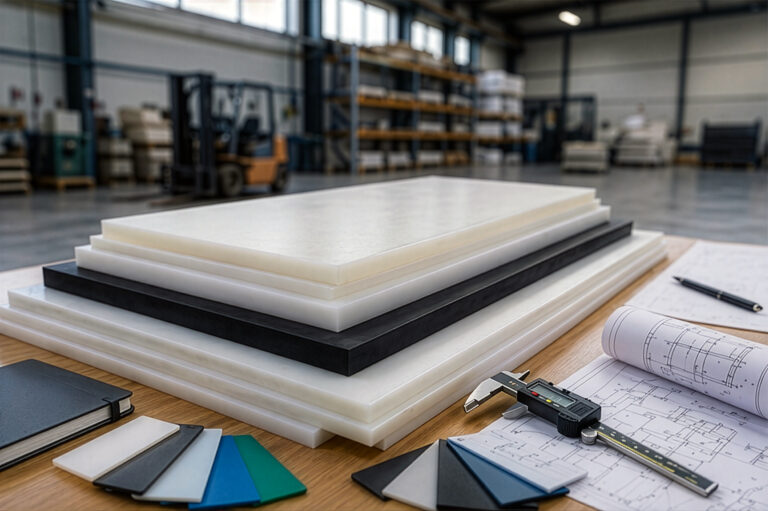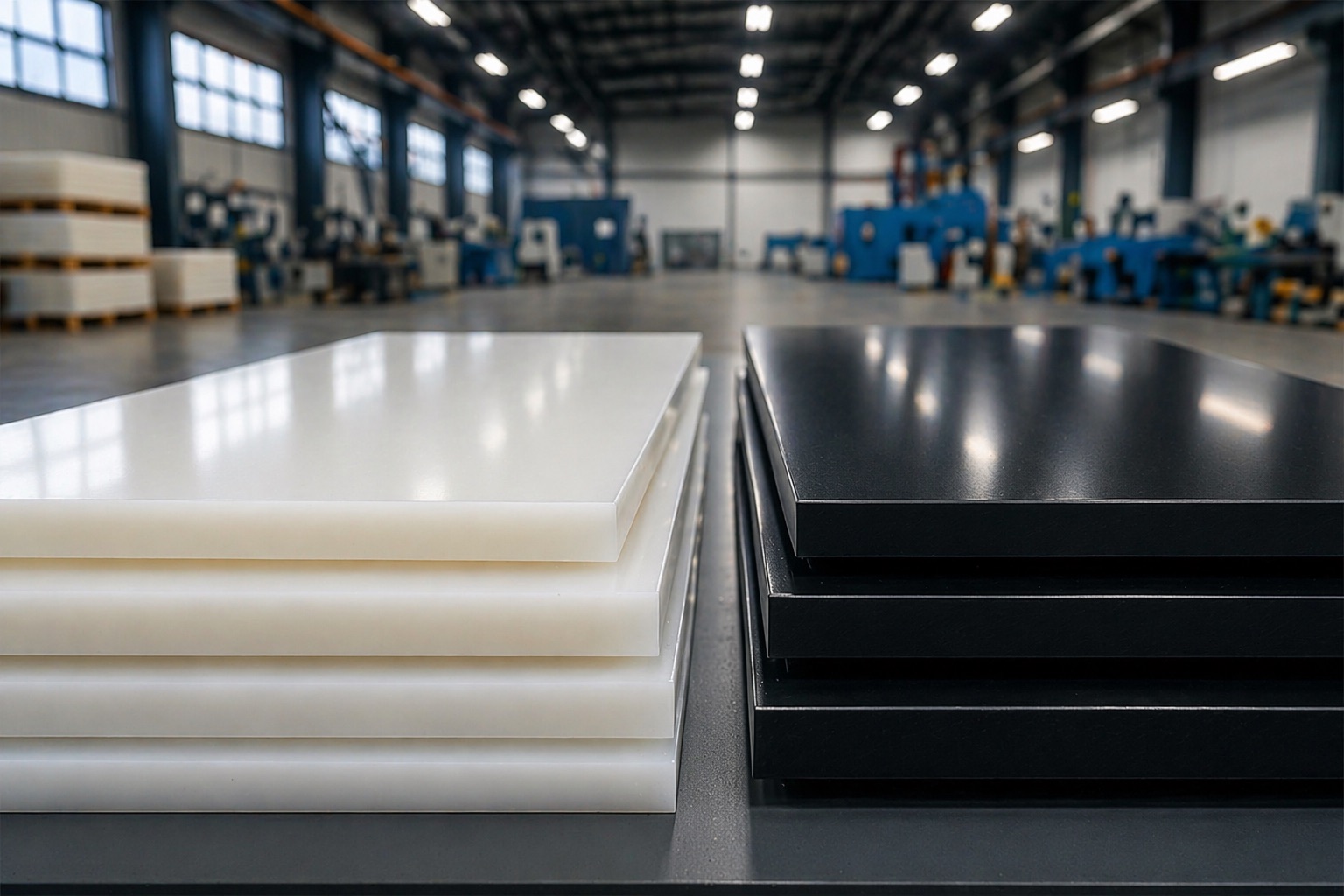
Choosing between PP and HDPE sheets sounds simple at first. Both are widely used in industrial applications. Both are durable thermoplastics. Both can help replace more traditional materials in demanding environments. But once a project moves from a rough idea to actual specification, the decision gets more technical.
That is where many teams pause.
The right material is not just the one with the best-looking datasheet. It is the one that matches the real application: chemical exposure, fabrication method, operating temperature, outdoor conditions, wear profile, maintenance routine, and expected service life. A sheet that performs well in a fabricated chemical tank may not be the smartest choice for a wear liner or a machined part. In the same way, a material that handles repeated impact may not deliver the same fabrication behavior needed for process equipment.
When people search for PP vs. HDPE sheets, they are usually not looking for a chemistry lesson. They want to know which material makes more sense for the job. That is the purpose of this guide.
This article breaks down the practical differences between polypropylene and high-density polyethylene sheets in industrial settings, with a focus on how engineers, buyers, fabricators, and project teams can make better decisions.
Before comparing the differences, it helps to understand why both materials appear so often in industrial projects.
PP and HDPE sheets are both used because they offer a combination of properties that make them very practical in demanding environments. They resist moisture. They are lighter than many traditional materials. They can often reduce corrosion-related headaches. They are used in fabricated structures, liners, covers, guards, ducts, tanks, components, and many other industrial parts.
In the right application, both can help improve:
That said, similar does not mean interchangeable.
The real question is not whether both materials are useful. It is where each one performs better.
The biggest mistake in material selection is treating PP and HDPE as if they solve the same problem in the same way.
They do not.
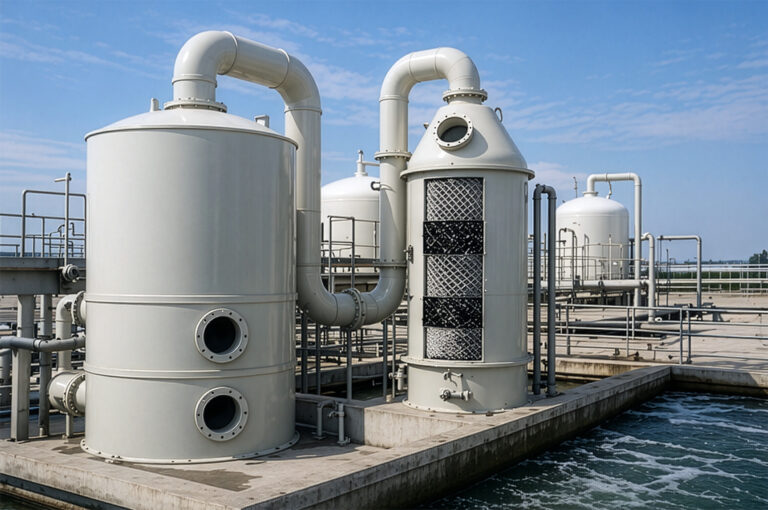
PP sheet is often chosen when the project depends on strong chemical resistance, good dimensional behavior, and reliable fabrication for process-related equipment. It is a common option for tanks, ducts, scrubbers, fabricated structures, and components exposed to chemical environments.
HDPE sheet, on the other hand, is often preferred when the application is more closely tied to impact, abrasion, low-friction behavior, moisture-heavy environments, or parts that benefit from toughness and machining performance.
That is the short version. The longer version depends on what the project needs most.
If the application is built around process fabrication, chemical duty, and welded industrial structures, PP tends to stand out.
If the application is built around wear, impact, handling, sliding, or repeated mechanical abuse, HDPE often becomes the stronger candidate.
PP sheets are frequently associated with fabricated industrial equipment for a reason. They fit very well in environments where chemical exposure and process reliability matter.
In many industrial projects, PP is selected for:
One of the main reasons is chemical resistance. In applications where the material will face aggressive substances, moisture, or process conditions that would quickly punish traditional materials, PP often becomes a very practical option.
Another reason is fabrication logic. Projects that require sheet welding, structural fabrication, or custom industrial assemblies often benefit from the way PP is used in this context. That matters because industrial buyers are not just buying raw material. They are buying what the material enables in the finished equipment.
PP also tends to make sense when the specification depends on a more process-oriented performance profile. If the design includes fabricated walls, internal divisions, welded joints, structural geometry, or exposure to controlled industrial media, PP frequently enters the conversation early.
This is why PP sheet is so common in sectors such as chemical processing, wastewater treatment, industrial utilities, agro-industrial process equipment, and fabricated containment systems.
In practical terms, PP is usually the stronger fit when the project asks for a fabricated industrial solution rather than a simple cut part.
HDPE sheet often becomes the better option when toughness, impact behavior, moisture resistance, and wear-related performance are more important than process-fabrication logic.
This is especially relevant in industrial environments where the material is exposed to:
HDPE is also widely used in machined components, liners, guides, support elements, and industrial parts where toughness and practical durability are central to the job.
In many facilities, that means HDPE sheet is considered for wear strips, liners, guides, support parts, general industrial components, surfaces exposed to repeated handling, and applications with frequent moisture or washdown.
Another area where HDPE becomes attractive is when the project is less about welded chemical-process fabrication and more about mechanical use in day-to-day industrial operation. In that kind of environment, the material’s practical toughness can be a major advantage.
For buyers and engineers, the takeaway is simple: HDPE often shines when the part is going to take hits, slide, wear, or work in physically demanding service conditions where toughness matters every day.
If the application involves chemicals, this is usually one of the first filters in the decision.
PP is widely associated with chemical-process environments because it is often used in fabricated equipment that must resist aggressive media. In chemical tanks, scrubbers, ducts, and wastewater-related equipment, that matters a lot. The material is not just surviving the environment. It is part of the equipment’s long-term reliability.
That does not mean HDPE has no place in chemically demanding settings. It does. But if the project revolves around fabricated process equipment and strong chemical resistance is central to the design, PP often becomes the more obvious starting point.
This is one reason why engineers do not usually compare materials in isolation. They compare them inside the real operating environment.
A better question than “Which one is better?” is this: which one fits the chemical duty, fabrication method, and expected industrial use more naturally?
That question usually leads to a more accurate answer.
Material choice is not only about in-service performance. It is also about how the product will be built.
That point gets overlooked surprisingly often.
Some projects are fundamentally fabrication-driven. They involve welded assemblies, tanks, ducts, enclosures, custom process equipment, and integrated industrial structures.
In those cases, PP often makes more sense because it is closely tied to that style of industrial fabrication. It is a material frequently specified where the end result is a fabricated system, not just a basic cut shape.
Other projects are more component-driven. They involve cut parts, machined items, wear pieces, sliding supports, guards, and utility parts.
In those cases, HDPE may become more attractive depending on the performance priorities.
So the fabrication route matters. A lot.
Before selecting between PP and HDPE sheets, the team should be clear on whether they are specifying a fabricated industrial structure, a process-related assembly, a machined component, a wear-focused part, or a general utility solution.
That one clarification often removes a lot of uncertainty.
If the environment includes repeated movement, impact, or abrasion, the comparison shifts.
This is where HDPE frequently gains attention. In many industrial applications, toughness and wear-related performance matter more than purely chemical-process behavior. Material handling environments are a good example. So are sliding surfaces, equipment contact points, and components that are constantly exposed to repetitive mechanical action.
When a project involves material flow, repeated loading and unloading, constant contact between surfaces, sliding or guiding behavior, or physical abuse in operation, HDPE often deserves a serious look.
This does not automatically eliminate PP. But it changes the priority list. Instead of asking primarily about process fabrication and chemical resistance, the team starts asking about impact, wear, abrasion, friction behavior, and toughness in use.
That is a very different decision path.
Outdoor use adds another layer to the selection process. Sunlight, weather exposure, and environmental cycling all influence long-term material behavior.
In outdoor industrial applications, the key question is not simply whether the material can go outside. It is whether the selected grade is appropriate for that exposure.
That is why UV-related requirements should be defined early. If the project includes outdoor service, exposed covers, external tank elements, fabricated equipment in open environments, or structures installed outside the building envelope, the material selection should reflect that.
This is another reason why buyers should avoid oversimplified comparisons. PP vs. HDPE sheets is not only about the base polymer family. It is also about the grade, the application conditions, and the expected service environment.
In many industrial settings, yes. That is exactly why these materials keep gaining space.
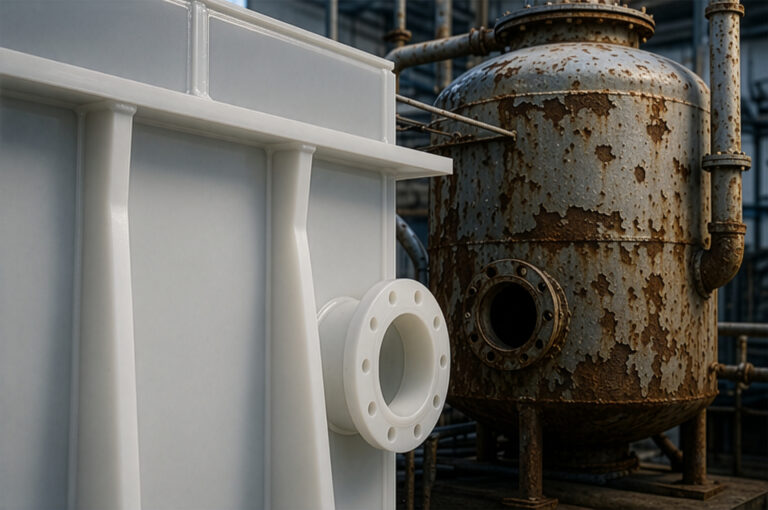
PP and HDPE sheets are often specified as alternatives to more traditional materials in applications where corrosion, weight, maintenance, and fabrication practicality become major issues. Depending on the use case, teams may be comparing them against:
Why does that substitution happen?
Because in the right industrial environment, PP and HDPE can offer practical advantages such as no corrosion-related maintenance cycle like metal in aggressive environments, lower weight for handling and installation, easier conversion into fabricated or machined parts, better suitability for moisture-heavy environments, and long-term operational simplicity in specific applications.
Of course, replacement is never automatic. The application still has to be validated carefully. But for many industrial uses, these materials are not niche alternatives anymore. They are realistic engineering options.
The smartest material decisions usually come from a structured review of the application rather than a general preference for one polymer over another.
Before specifying PP or HDPE sheet, a technical team should review at least these points:
Is this a tank wall, wear liner, guard, fabricated duct, cut part, machined component, support surface, or protective element?
Chemical media, moisture, impact, abrasion, cleaning agents, outdoor weather, UV, or process temperature all change the answer.
Will it be welded, machined, thermoformed, cut, assembled into a larger fabricated system, or installed as a wear component?
Corrosion resistance, toughness, dimensional behavior, sliding performance, cleanability, and long-term maintenance reduction all affect the decision.
Some applications need standard supply. Others need custom dimensions, converted parts, or technical support during specification.
The more precise those answers are, the easier it becomes to choose the right material.
For industrial buyers, the material discussion usually does not stop at the resin family. The real issue is whether the manufacturer understands the application and can support the project with the right industrial logic.
That is where technical partnership matters.
Lamiex works as a Brazilian B2B manufacturer focused on industrial PP and HDPE sheet solutions for technical applications. That means the conversation is not framed around consumer uses, small-volume retail, or generic plastic supply. It is framed around industrial performance, fabrication needs, custom opportunities, and long-term use in demanding environments.
When a customer is deciding between PP and HDPE sheets, the decision often becomes clearer once the application is reviewed through a more practical lens:
That kind of discussion usually produces better specifications and better quotes.
There is no universal winner in the PP vs. HDPE sheets decision. The better material is the one that fits the application more accurately.
PP is often the stronger choice for fabricated industrial equipment, chemical tanks, wastewater systems, and process-related structures where chemical resistance and fabrication logic are central.
HDPE often becomes the stronger option for applications tied to impact, abrasion, wear, sliding surfaces, moisture-heavy environments, and industrial parts that depend on practical toughness.
The wrong way to choose is by relying on general assumptions.
The right way is to evaluate the real operating environment, the fabrication method, and the performance priorities of the project.
That is what turns material selection from guesswork into engineering.
If your team is evaluating PP or HDPE sheets for an industrial application, the best next step is to review the project requirements in detail before requesting a quote. That usually leads to a better specification, a better material fit, and a more dependable final result.
Lorem ipsum dolor sit amet, consectetur adipiscing elit. Sed posuere consectetur est at lobortis. Aenean lacinia bibendum nulla sed consectetur. Sed posuere consectetur est at lobortis. Cras mattis consectetur purus sit amet fermentum. Nullam quis risus eget urna mollis ornare vel eu leo.